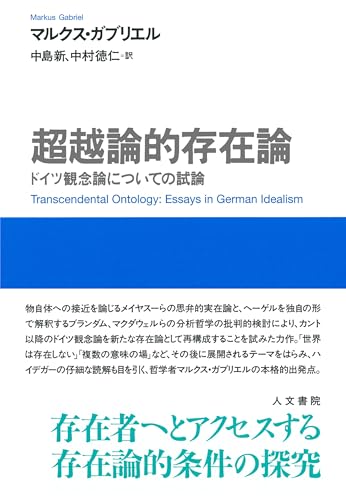
マルクス・ガブリエル(Markus Gabriel、1980年–)は、認識論、存在論、精神の哲学を研究し、「新しい実在論」を提唱する哲学者。ハーゲン、ボン、ハイデルベルクで哲学、古典文献学、ドイツ文学を学び、2005年にシェリングの後期哲学の研究でハイデルベルク大学の博士号を取得した。2008年には古代の懐疑主義と観念論の研究で教授資格を取得し、ニューヨークのニュースクールでの勤務を経て、2009年にボン大学の認識論・近現代哲学の講座を担当した。ドイツ観念論や古代哲学の研究を背景に、分析哲学と大陸哲学の双方を参照しながら、人間の認識と実在の関係を問い直してきた。2013年の『なぜ世界は存在しないのか』(原題 “Warum es die Welt nicht gibt”、英題 “Why the World Does Not Exist”、邦訳2018年)では、存在することを「意味の場」に現れることとして捉え、個々の事物の存在を否定するのではなく、あらゆるものを包み込む単一の全体としての「世界」という考え方を批判した。『「私」は脳ではない――21世紀のための精神の哲学』(原題 “Ich ist nicht Gehirn”、英題 “I Am Not a Brain”、邦訳2019年)では、自己や意識を脳の働きだけに還元する神経中心主義を検討し、自己意識と自由の問題を論じた。2026年に邦訳された『意味・無意味・主観性』(原題 “Sense, Nonsense, and Subjectivity”)では、正しい認識だけでなく、無知、虚偽、錯覚、妄想にも考察を広げ、現実を誤って理解することがどのように可能なのかを、主観性や自己決定と結びつけて探究した。
Markus Gabriel (born 1980) is a philosopher working in epistemology, ontology, and the philosophy of mind, and a proponent of New Realism. He studied philosophy, classical philology, and German literature in Hagen, Bonn, and Heidelberg. In 2005 he received his doctorate at Heidelberg for research on Schelling’s late philosophy, followed in 2008 by his habilitation on skepticism and idealism in antiquity. After teaching at the New School for Social Research in New York, he took up the chair in epistemology and modern and contemporary philosophy at the University of Bonn in 2009. Drawing on German Idealism and ancient philosophy, his work engages both analytic and continental traditions to reconsider the relation between knowledge and reality. In “Why the World Does Not Exist,” originally published in German in 2013 and translated into Japanese in 2018, he understood existence in terms of appearing in a field of sense. His argument challenged the idea of a single all-encompassing world rather than denying the existence of particular things. “I Am Not a Brain: Philosophy of Mind for the 21st Century,” translated into Japanese in 2019, examined neurocentrism, the identification of the self with the brain, and explored consciousness, self-consciousness, and freedom. In “Sense, Nonsense, and Subjectivity,” whose Japanese translation appeared in 2026, he extended the inquiry beyond successful knowledge to ignorance, falsehood, illusion, and delusion. The book investigated how reality can be misunderstood, relating human fallibility to subjectivity and self-determination.