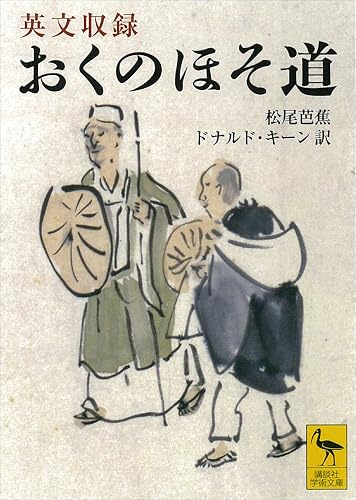
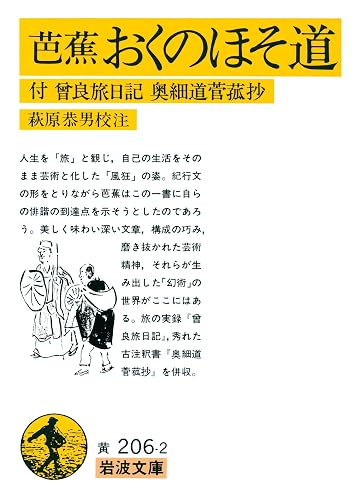
Matsuo Basho (1644–1694) was a poet of the early Edo period who developed a distinctive style of haikai, the linked-verse tradition from which modern haiku emerged. Born in Iga Province, he served Todo Yoshitada as a young man and studied poetry with him in the tradition of Kitamura Kigin. After Yoshitada’s death, Basho left his service and moved to Edo around 1672, establishing himself as a professional poetry master. In 1680 he moved from Nihonbashi to a retreat in Fukagawa. Exchanges with disciples and repeated journeys became central to his writing. “Nozarashi Kiko,” an account of the journey he began in 1684, combined prose and hokku with his return to Iga, a visit to his mother’s grave, and meetings with fellow poets. “Oi no Kobumi,” based on travels beginning in 1687, connected journeys through Iga, Ise, and Yoshino with reflections on artistic practice. It considered a common artistic path linking Saigyo’s poetry, Sogi’s linked verse, Sesshu’s painting, and Sen no Rikyu’s tea. In 1689 Basho left Edo with Kawai Sora, travelling through northeastern Japan and Hokuriku to Ogaki. The resulting “Oku no Hosomichi,” often translated as “The Narrow Road to the Deep North,” wove encounters, partings, and the passage of time into concise prose and verse. Visits to places celebrated in earlier poetry joined personal experience with literary and historical memory. Basho continued revising the work after the journey and completed a fair copy in 1694. In his final years he taught disciples a style known as karumi, or lightness, drawing on everyday subjects. He died in Osaka that year while travelling from Iga through Nara.