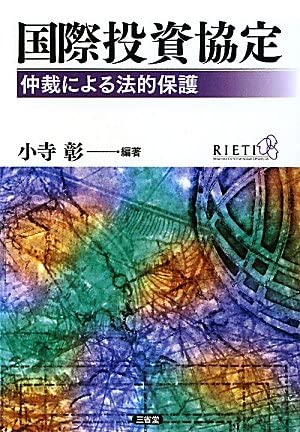
Akira Kotera (1952–2014) was a Japanese scholar of international law and international economic law. He graduated from the University of Tokyo’s Faculty of Law in 1976 and worked as a research assistant there before teaching at Tokyo Metropolitan University. He returned to the University of Tokyo’s College of Arts and Sciences in 1989 and became a professor in 1995. His research examined how legal rules function among sovereign states, particularly in trade, investment and dispute settlement. In WTO Taisei no Ho Kozo (The Legal Structure of the WTO System), he considered trade obligations and dispute settlement within the distinctive structure of international society, questioning assumptions that WTO agreements and proceedings can be understood simply as equivalents of domestic legislation and courts. He served on the WTO Permanent Group of Experts under the subsidies agreement from 1996 to 1999 and joined RIETI as a faculty fellow in 2001. Paradaimu Kokusaiho (Paradigms of International Law) connects concrete cases with questions concerning the domestic application of treaties, jurisdiction, territory and state responsibility, inviting readers to examine relationships between doctrine, theory and judicial decisions. His investment-law projects brought together scholars, lawyers and policy officials to analyze arbitral decisions involving investors and host states. The volume he edited, Kokusai Toshi Kyotei: Chusai ni Yoru Hoteki Hogo (International Investment Agreements: Legal Protection through Arbitration), examines national treatment, fair and equitable treatment, expropriation and procedural questions. This work sought to clarify the protection that treaty language actually provides, connecting foundational international-law analysis with the practical demands of negotiations and overseas business.