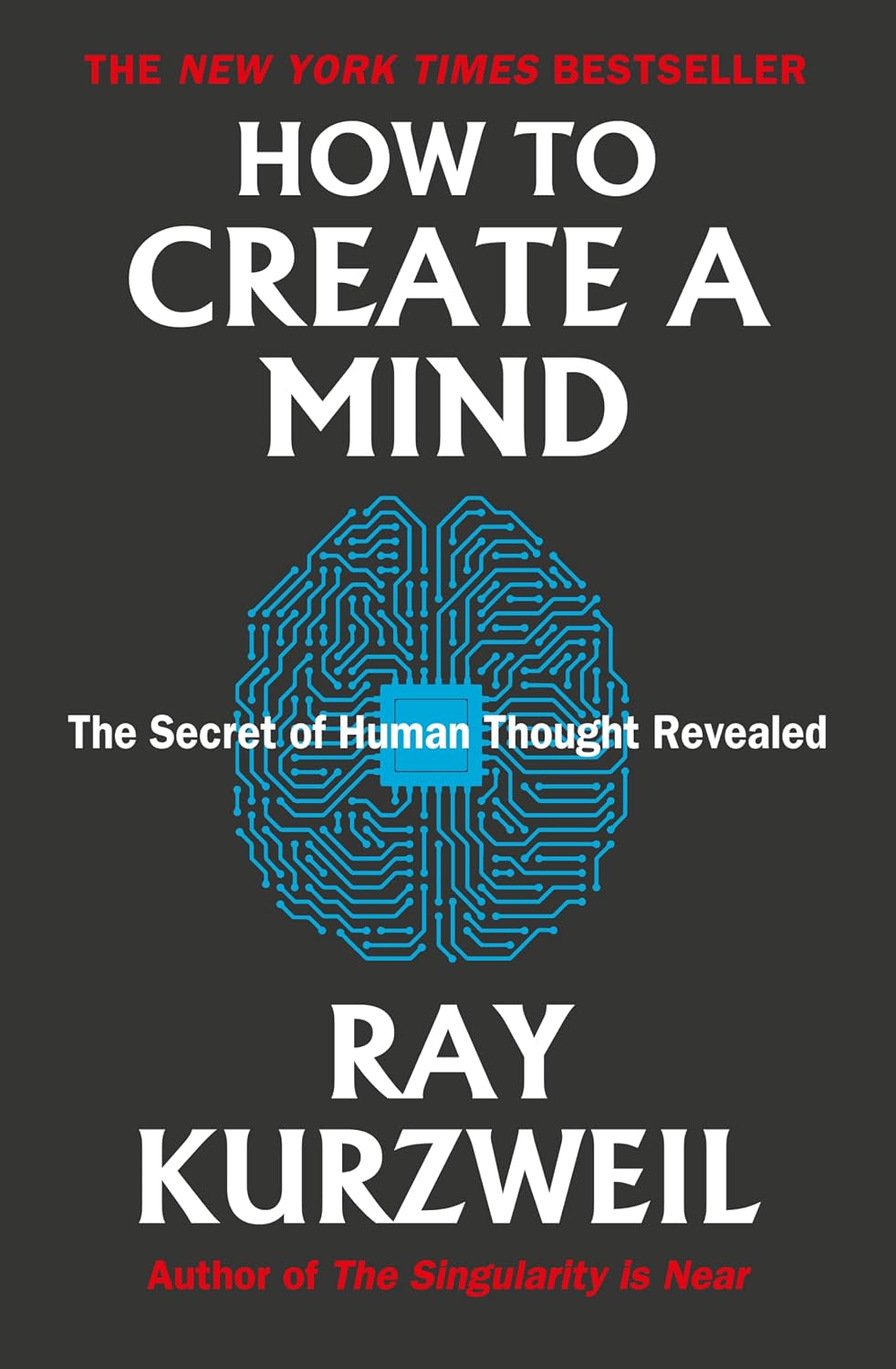
レイ・カーツワイル(1948年–)は、文字認識、音声処理、電子楽器の開発と人工知能の未来予測に取り組んできたアメリカの発明家、AI研究者、未来学者。ニューヨーク生まれ。マサチューセッツ工科大学(MIT)でコンピュータ科学と創作を学び、在学中には高校生と大学を結びつける情報サービスの会社を設立し、1970年に学士号を取得した。1976年に発表した視覚障害者向けの読み上げ装置は、印刷物を取り込むスキャナー、さまざまな書体を認識するOCR、音声合成を組み合わせたものだった。利用者の一人だったスティーヴィー・ワンダーとの交流は、生楽器の音を再現するシンセサイザーの開発にもつながった。音声認識などの計算機技術への貢献により1999年の米国国家技術賞を受賞した。Googleでは機械学習と自然言語処理の研究に携わった。こうした開発活動と並行して、情報技術の性能が指数関数的に向上するという「収穫加速の法則」を軸に、人間と機械の関係を論じてきた。『シンギュラリティは近い――人類が生命を超越するとき』(紙版邦題『ポスト・ヒューマン誕生』、原題 “The Singularity Is Near: When Humans Transcend Biology”)では、人工知能、遺伝子工学、ナノテクノロジーの進歩を結びつけ、2045年に人間と機械の知能が融合するという自身の予測を展開した。続編『シンギュラリティはより近く――人類がAIと融合するとき』(原題 “The Singularity Is Nearer: When We Merge with AI”)では、その予測を近年の技術動向から再検討し、脳のクラウド接続、寿命の延長、雇用の変化とともに、AIやバイオテクノロジーの危険性を論じた。
Ray Kurzweil (born 1948) is an American inventor, artificial intelligence researcher, and futurist whose work spans optical character recognition, speech processing, electronic instruments, and technological forecasting. Born in New York, he studied computer science and creative writing at the Massachusetts Institute of Technology. While a student, he founded a company that matched high school students with colleges, and he completed his bachelor’s degree in 1970. Introduced in 1976, the Kurzweil Reading Machine combined a scanner, software that recognized different typefaces, and speech synthesis to make printed material accessible to blind readers. His association with one of its early users, Stevie Wonder, helped lead to the development of a synthesizer that reproduced acoustic instruments. He received the 1999 National Medal of Technology for contributions to computing, including speech recognition, and later worked at Google on machine learning and natural language processing. Alongside these inventions, his writing developed the “law of accelerating returns,” an account of exponential improvements in information technology. In “The Singularity Is Near: When Humans Transcend Biology,” he linked advances in artificial intelligence, genetics, and nanotechnology to his prediction of a merger between human and machine intelligence around 2045. Its sequel, “The Singularity Is Nearer: When We Merge with AI,” reassessed that outlook in light of subsequent technological developments. It examined connections between brains and cloud computing, radical life extension, changes in employment, and the potential dangers of artificial intelligence and biotechnology.