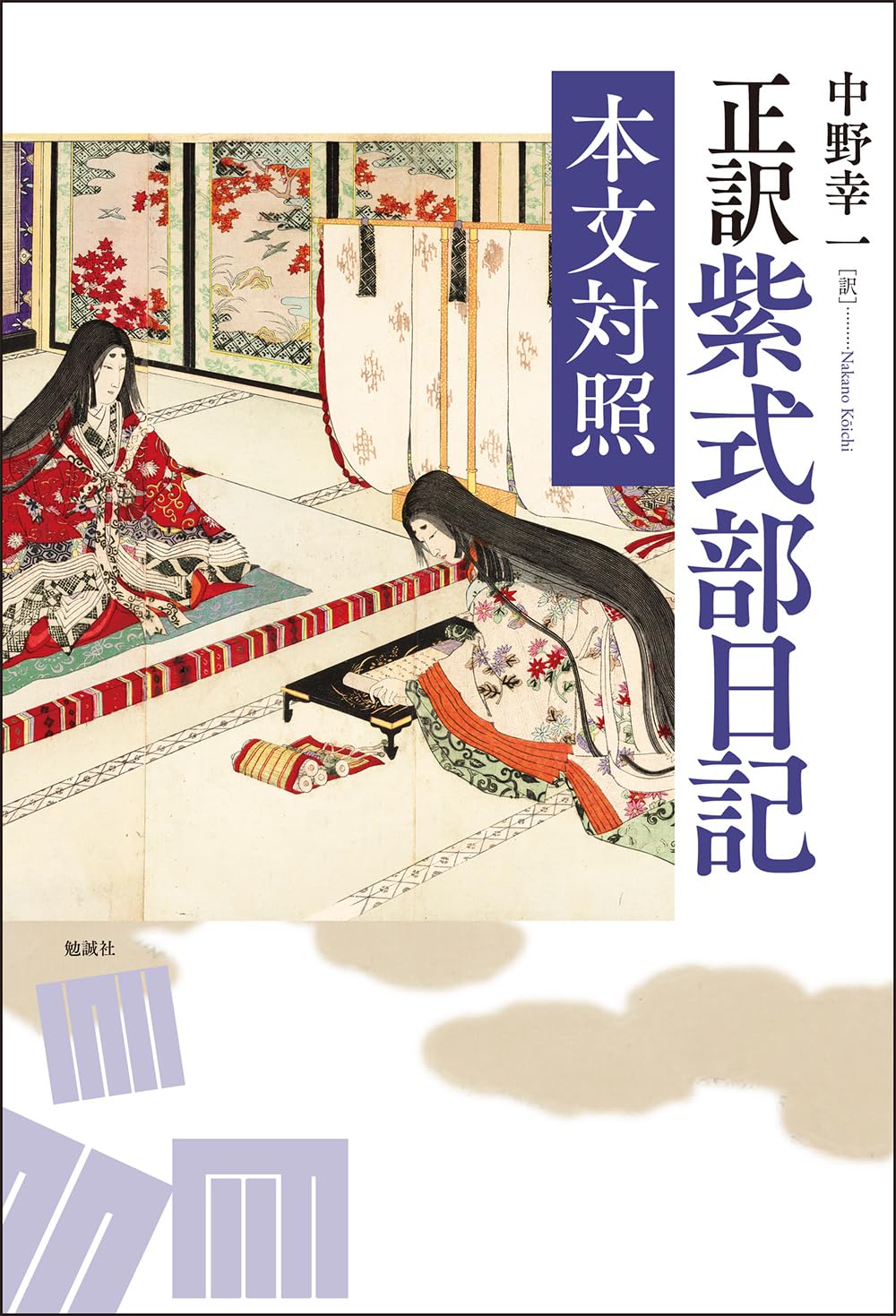
紫式部(むらさきしきぶ)は、十世紀後半から十一世紀初めの平安時代に活動した日本の物語作者、歌人。本名と正確な生没年は分かっていない。漢詩文に通じた藤原 為時の娘として育ち、996年に越前守となった父に伴って越前へ赴いた。藤原 宣孝と結婚し、夫との死別を経て、一条天皇の中宮・彰子に女房として仕えた。『源氏物語』(英題 “The Tale of Genji”)は、宮仕えの時期にはすでに読まれていたことが知られるが、執筆の開始や完成の時期は確定していない。全五十四帖にわたり、帝の子として生まれた光源氏の恋愛や政治的な浮沈、家族関係を描き、後半では薫や匂宮ら次世代の人物へと物語を移した。身分や宮廷の制度に左右される人間関係と、愛情、嫉妬、喪失などの心の動きを重ね、貴族社会で生きる人々の時間を描いた。家集『紫式部集』には、越前へ向かう旅や滞在中に詠んだ歌も残り、琵琶湖沿いの道を進みながら都を恋しく思う気持ちなどが読み取れる。宮仕えの経験を記した『紫式部日記』(英題 “The Diary of Lady Murasaki”)では、1008年の彰子の皇子出産を中心に、祝いの儀礼や宮廷の人々の振る舞いを細かく描写した。華やかな行事の記録だけでなく、自らの性格や生い立ちへの省察、同僚の女房たちへの批評を交え、宮廷生活の見聞とその中で抱いた心境を書き留めた。
Murasaki Shikibu was a Japanese prose writer and waka poet active in the late tenth and early eleventh centuries during the Heian period. Her personal name and exact dates of birth and death remain unknown. The daughter of Fujiwara no Tametoki, a scholar of Chinese literature, she accompanied her father to Echizen after his appointment as provincial governor in 996. She married Fujiwara no Nobutaka and, after his death, served as a lady-in-waiting to Shoshi, consort of Emperor Ichijo. “The Tale of Genji” was already circulating during her service at court, although the dates when she began and completed it are uncertain. Across fifty-four chapters, it follows the loves, political fortunes, and family relationships of Hikaru Genji, an emperor’s son, before shifting to a younger generation that includes Kaoru and Niou. It interweaves the constraints of rank and court institutions with affection, jealousy, and bereavement, tracing lives as they unfold within aristocratic society. Her poetry collection, “Murasaki Shikibu Shu,” preserves poems composed on the journey to Echizen and during her stay there, including expressions of longing for the capital while travelling along Lake Biwa. In “The Diary of Lady Murasaki,” her experience of court service took a different literary form. Centered on Shoshi’s delivery of an imperial prince in 1008, it described celebratory rituals and the conduct of people around the court in close detail. Alongside its account of public occasions, it included reflections on her own character and earlier life, and assessments of other court women. It recorded both the ceremonial world she observed and her personal responses to life within it.