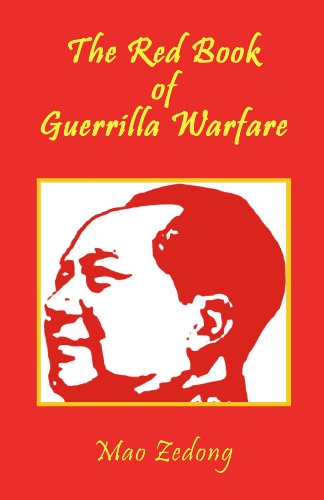
Mao Zedong (1893–1976) was a Chinese revolutionary, political leader, and political theorist. A founding member of the Chinese Communist Party, he emerged as its dominant leader through the Long March, the war against Japan, and the Chinese Civil War. In 1949, he proclaimed the establishment of the People's Republic of China and remained China's paramount leader until his death. His rule transformed the country's political and social institutions, but the Great Leap Forward contributed to a catastrophic famine, while the Cultural Revolution brought widespread persecution, violence, and social upheaval. Mao adapted Marxism-Leninism to the conditions of China's largely rural society, developing ideas that became known as Mao Zedong Thought and influenced revolutionary movements beyond China. In "On Practice" and "On Contradiction," he examined the relationship between knowledge and practice and the role of contradictions in processes of change. "Quotations from Chairman Mao Tse-tung," a collection of excerpts from his speeches and writings widely known as the "Little Red Book," was distributed on an enormous scale during the Cultural Revolution and became a powerful instrument for spreading Mao's ideology and reinforcing his cult of personality.