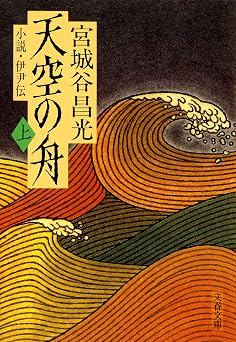
Masamitsu Miyagitani (born 1945) is a Japanese historical novelist whose fiction draws on ancient China and Japanese history. Born in Gamagori, Aichi Prefecture, he graduated in English literature from Waseda University. While working in publishing he studied under the novelist Masaaki Tachihara, then returned to his hometown. After a long interruption in his writing, Chinese history and classical texts became central to his fiction. In 1991, “Tenku no Fune” won the Nitta Jiro Literary Prize. Following Yi Yin, who helped establish the Shang dynasty, it explored political action and human relationships during a change of dynasties. That same year, “Kaki Shunju” won the Naoki Prize, interweaving the life of a woman of the Spring and Autumn period with political rivalry and conflict among states. Miyagitani subsequently expanded his work to Japanese historical fiction and essays while continuing to portray ancient rulers and ministers through their decisions, words and relationships with changing states. His distinctions included the Minister of Education’s Art Encouragement Prize for fiscal 1993, the Shiba Ryotaro Prize in 2000 and the Kikuchi Kan Prize in 2004. He received the Medal with Purple Ribbon in 2006 and the Order of the Rising Sun, Gold Rays with Rosette, in 2016. In “Sangokushi Meishin Retsuden”, he returned to figures whom his long novel about the Three Kingdoms had not fully explored, examining the ministers who supported their rulers. The sequence concluded with its volume on Wu in 2025.