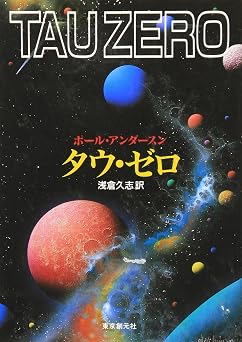
ポール・アンダースン(1926–2001)は、ペンシルベニア州ブリストル生まれのSF作家、ファンタジー作家。ミネソタ大学在学中の1947年に最初の作品を発表し、1948年に物理学のB.S.を取得した後、専業作家となった。北欧の言語や物語への関心と自然科学の知識を、SF、歴史小説、ファンタジーの創作に取り入れた。『脳波』(原題 “Brain Wave”)では、人間だけでなく動物の知能も急に高まった世界を通じ、社会を支える仕事や能力の意味を問い直した。『タウ・ゼロ』(原題 “Tau Zero”)は、減速できなくなった恒星間宇宙船の乗員を描き、相対論的な時間や宇宙の変化を、人間関係と共同体の問題に結びつけた。『折れた魔剣』(原題 “The Broken Sword”)では、北欧伝承を背景に、人間と妖精の世界が交錯する悲劇を展開した。1972年から1973年にはアメリカSF作家協会の会長を務め、ヒューゴー賞7回、ネビュラ賞3回を受賞し、1997年にアメリカSFファンタジー作家協会からグランド・マスターの称号を授与された。式典は1998年に行われ、2000年にはSF・ファンタジーの殿堂入りを果たした。
Poul Anderson (1926–2001) was a science fiction and fantasy writer born in Bristol, Pennsylvania. He published his first story in 1947 while attending the University of Minnesota, earned a B.S. in physics in 1948, and then wrote full time. His scientific knowledge and interest in Scandinavian languages and traditions informed fiction across several genres. Brain Wave imagines a sudden increase in human and animal intelligence, questioning the relationships between ability, work and social organization. Tau Zero follows a starship unable to decelerate, connecting relativistic time and cosmic change with the survival of a human community. The Broken Sword draws on Norse traditions in a tragedy involving the intertwined worlds of humans and elves. Anderson served as president of the Science Fiction Writers of America in 1972–1973. He won seven Hugo Awards and three Nebula Awards and was named an SFWA Grand Master in 1997, with the ceremony in 1998. He was inducted into the Science Fiction and Fantasy Hall of Fame in 2000.