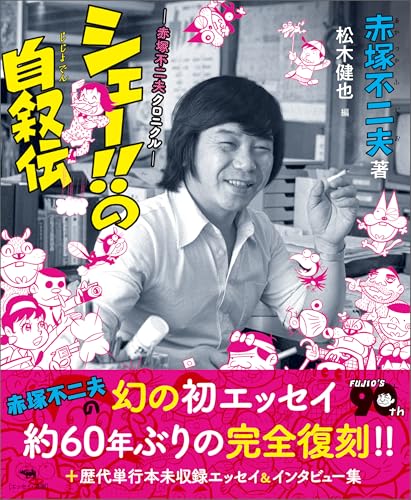
赤塚不二夫(あかつか ふじお、1935–2008)は、日本の漫画家。本名は赤塚藤雄。旧満州国に生まれ、終戦後に日本へ引き揚げた。1956年に『嵐をこえて』でデビューし、トキワ荘に入居。1962年に連載を始めた『おそ松くん』で第10回小学館漫画賞を受賞し、イヤミの「シェー!」をはじめとする言葉やポーズを広く浸透させた。代表作『天才バカボン』では、常識や論理を軽々と反転させるバカボンのパパを中心に、ナンセンスな言葉遊びと予測不能な展開を繰り広げた。「これでいいのだ」という決めぜりふや、レレレのおじさん、ウナギイヌなどのキャラクターは、漫画の枠を越えて親しまれている。
Fujio Akatsuka (1935–2008) was a Japanese manga artist whose birth name was Fujio Akatsuka, written with different kanji. Born in Manchukuo, he returned to Japan with his family after World War II. He made his debut with "Arashi o Koete" in 1956 and later moved into Tokiwa-so, the apartment building associated with a generation of influential manga artists. His 1962 series "Osomatsu-kun" won the 10th Shogakukan Manga Award and popularized characters, expressions, and comic poses such as Iyami’s “Sheeh!” His representative work, "Tensai Bakabon," centers on Bakabon’s eccentric father and overturns everyday logic through nonsense, wordplay, and unpredictable situations. Its phrase “Kore de ii no da,” meaning roughly “This is fine as it is,” and characters such as Rerere no Ojisan and Unagi-Inu became widely recognized elements of Japanese popular culture.
Links : Wikipedia ↗
著者データを読み込んでいます…
アワード名の一部を入力してください。